A short animated film about the feedback loops likely to lead to catastrophic climate change, by Leo Murray.
The script, with extensive peer-reviewed references and additional information and links, is available at wakeupfreakout.org/
Wake Up, Freak Out - then Get a Grip from Leo Murray on Vimeo.
Tuesday, September 14, 2010


The Fight of Our Lives
By Murray Dobbin
Murray Dobbin's Blog
 In the world of progressive, grass roots politics, everyone, it seems, is running as fast as they can. That is certainly the impression I have had over the past few years, when almost everyone I know is involved in several social movement activities or individual actions.
But it may actually be the case that some aren’t running at all any more — they are, as a colleague responding to one of my recent blogs suggested, immobilized: “…inundated and overwhelmed by the number of issues that arise on a daily basis. Add to this the sheer complexity of the many issues, the need to understand that complexity and its context in the larger scheme of things, confounded by the shifting and introduction, on an almost daily basis, of new or related issues, and you have all of the ingredients that can promote a kind of social paralysis…”
Murray Dobbin's Blog

But it may actually be the case that some aren’t running at all any more — they are, as a colleague responding to one of my recent blogs suggested, immobilized: “…inundated and overwhelmed by the number of issues that arise on a daily basis. Add to this the sheer complexity of the many issues, the need to understand that complexity and its context in the larger scheme of things, confounded by the shifting and introduction, on an almost daily basis, of new or related issues, and you have all of the ingredients that can promote a kind of social paralysis…”
Monday, September 13, 2010
The powerful coalition that wants to engineer the world's climate
Businessmen, scientists and right-wing thinktanks are joining forces to promote 'geo-engineering' ideas to cool the planet's climate, writes Clive Hamilton
guardian.co.uk
 Some people geo-engineering techniques, such as filling the sky with shiny dust to reflect sunlight, could curb such temperature rises without the need to restrict greenhouse gas emissions
In August 1883 the painter Edvard Munch witnessed an unusual blood-red sunset over Oslo. Shaken up by it, he wrote in his diary that he "felt a great, unending scream piercing through nature". The incident inspired him to create his most famous work, The Scream.
The sunset he saw that evening followed the eruption of Krakatoa off the coast of Java. The explosion, one of the most violent in recorded history, sent a massive plume of ash into the stratosphere, turning sunsets red around the globe. The gases emitted also caused the Earth to cool by more than one degree and disrupted weather patterns for several years.
Read more HERE.
Sunday, September 12, 2010
Protesters descend on Montreal's World Energy Congress
QMI Agency
 MONTREAL — Activists covered themselves in oil and rallied outside the Montreal Convention Centre as government officials met at the World Energy Congress Sunday.
About 60 Greenpeace activists staged a Black Tide Beach Party, and 12 people donned oil-covered bathing suits, to protest the use of oil and to advocate for renewable energy options.
As well, hundreds of people gathered outside the convention centre holding banners and signs that read, "Go beyond oil."
"Dirty energy is wreaking havoc all over the world, from the BP oil disaster in the Gulf of Mexico to the reckless expansion of drilling into fragile environments such as the Arctic, " Greenpeace International climate and energy campaigner Julien Vincent said in a release about the protest. "As the dirty energy industry descends on Montreal for the World Energy Congress, the message is clear: we desperately need an energy revolution, moving beyond oil and other dirty fuels to power our future with clean, renewable energy."
Protesters were calling on a global ban on new exploration in the Arctic for oil and gas.
The event participants also criticized the plans by Quebec Premier Jean Charest to allow exploration for oil and gas in the province.
"The Charest government must announce an immediate moratorium on exploration for oil and gas in Quebec," Greenpeace climate and energy campaigner Virginie Lambert-Ferry said.
The World Energy Congress opened in Montreal Sunday. The congress is held every three years and looks at global energy issues. More than 5,000 government officials from around the world are in Montreal for the four day congress
Saturday, September 11, 2010
Tarnishing the Maple Leaf
Tarnishing the Maple Leaf - How the Tar Sands Drives Canada's Climate Positions
Climate Action Network Canada / Tar Sands Group
December 2009
Climate Action Network Canada / Tar Sands Group
December 2009
 |
| PDF HERE |
Climate Change: Public Denial and Corporate Disinformation
By Dick Bennett
Peace, Justice Ecology Blog
 Poison ivy grows faster and becomes more poisonous. Ragweed produces more pollen, and asthma. Japanese beetles live longer. Ticks increase.
Ouch. What, when, where? Duke University scientists discovered these consequences of the CO2 increasing in our atmosphere and resultant warming.
Well, it’s good to be warned now, you might say. But these warnings were published in 2006. That is, before 2006 scientists knew that anthropogenic C02 and warming were increasing and were already studying their effects. In 2007 the summative, magisterial 4th Intergovernmental Panel on Climate Change Report was published. And since then hundreds of additional scientific studies and many books have been published reaffirming the IPCC Reports. For example, in 2010: Bill McKibben,. Eaarth: Making Life on a Tough New Planet; Peter D. Ward, The Flooded Earth: Our Future In a World Without Ice Caps.
The question then is not is warming happening, but why do so many people behave as though it isn’t? Yes, we resist change even though we know our grandchildren will pay for it a decade from now. But is reducing CO2 entirely within our power?
Not if corporations decide. We clutch the water-logged life-preserver of denial and inaction as we sink, partly because of the deliberate, systematic, extraordinarily well-financed disinformation disseminated by corporations to ensure business profit as usual.

The result is melting ice, rising, acidic seas, weather extremes, droughts, forest fires, and super ivy, ragweed, beetles, and ticks.
Peace, Justice Ecology Blog
 Poison ivy grows faster and becomes more poisonous. Ragweed produces more pollen, and asthma. Japanese beetles live longer. Ticks increase.
Ouch. What, when, where? Duke University scientists discovered these consequences of the CO2 increasing in our atmosphere and resultant warming.
Well, it’s good to be warned now, you might say. But these warnings were published in 2006. That is, before 2006 scientists knew that anthropogenic C02 and warming were increasing and were already studying their effects. In 2007 the summative, magisterial 4th Intergovernmental Panel on Climate Change Report was published. And since then hundreds of additional scientific studies and many books have been published reaffirming the IPCC Reports. For example, in 2010: Bill McKibben,. Eaarth: Making Life on a Tough New Planet; Peter D. Ward, The Flooded Earth: Our Future In a World Without Ice Caps.
The question then is not is warming happening, but why do so many people behave as though it isn’t? Yes, we resist change even though we know our grandchildren will pay for it a decade from now. But is reducing CO2 entirely within our power?
Not if corporations decide. We clutch the water-logged life-preserver of denial and inaction as we sink, partly because of the deliberate, systematic, extraordinarily well-financed disinformation disseminated by corporations to ensure business profit as usual.

In Merchants of Doubt, Naomi Oreskes and Erik Conway tell about corporate use of a few bought scientists to obfuscate and delay urgently needed change. Oil company officials particularly have sowed confusion. Take as one example our knowledge of the steady retreat of Arctic sea ice, the melting of Greenland’s massive ice sheets, and the spectacular breakup in 2002 of the Larsen B Ice Shelf in Antarctica, all found in IPCC reports. Well, in 2007, just as the new IPCC report was being released, one of the front groups financed by ExxonMobil offered $10,000 for each pseudo-study disputing the findings of the scientific community.
The result is melting ice, rising, acidic seas, weather extremes, droughts, forest fires, and super ivy, ragweed, beetles, and ticks.
Derek Wall on ecosocialism - video
This is a fine, short speach by ecosocialist Derek Wall addressed to the Respect Coalition in the U.K. in 2007.
James Cameron to visit tar sands
By Jorge Barrera and Nigel Newlove
APTN National News
 OTTAWA — Avatar director James Cameron will be visiting the Alberta tar sands and meeting with First Nations leaders in the area this month, APTN National News has confirmed.
The blockbuster Hollywood director is expected to be in the area for several days to tour the tar sands, meet with First Nations leaders along with industry and government officials.
The tour is being organized by local First Nations communities along with the Indigenous Environmental Network.
How much is left
A graphical accounting of the limits to what one planet can provide
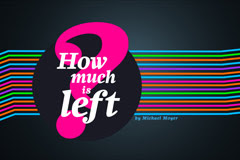 How Much Is Left? The Limits of Earth's Resources, Made Interactive
This Web-only article is a special rich-media presentation of the feature, "How Much Is Left?," which appears in the September 2010 issue of Scientific American. The presentation was created by Zemi media.
View HERE
 How Much Is Left? The Limits of Earth's Resources, Made Interactive
This Web-only article is a special rich-media presentation of the feature, "How Much Is Left?," which appears in the September 2010 issue of Scientific American. The presentation was created by Zemi media.
View HERE
Thursday, September 9, 2010
Anarchism as a political movement
The Ecosocialist International Network has recently been discussing anarchism. I have added the following document from Kasama as part of this discussion. - NYC
Wednesday, September 8, 2010
Cars
Cars: a time of transformations
Jean-Claude Vessillier
International Viewpoint
 What was perceptible from the second half of 2008 has been confirmed: the crisis which has hit the car industry at a world level is not a simple depression preceding an inevitable recovery where everything goes back to what it was before, whether concerning the exploitation of the work force or the use of the individual car.
The crisis of the sector has provided the opportunity for a profound restructuring among capitalist groups, continents and geographical areas, constructors, spare parts suppliers, subcontractors and energy producers. Structural changes combined with sharp conjunctural variations are having a direct effect on jobs and working conditions where flexibility is on the agenda everywhere.
Read more HERE.
Jean-Claude Vessillier
International Viewpoint

The crisis of the sector has provided the opportunity for a profound restructuring among capitalist groups, continents and geographical areas, constructors, spare parts suppliers, subcontractors and energy producers. Structural changes combined with sharp conjunctural variations are having a direct effect on jobs and working conditions where flexibility is on the agenda everywhere.
Read more HERE.
Failures, Errors & the Boundaries of Our Minds
Brecht Forum
New York
As part of the Brecht Forum's annual Intensive Intro to Marxism, Richard Levins speaks to how the dialectical method allows us to understand and learn from our inevitable failures, errors and misunderstandings of both nature and society.
A Harvard School of Public Health faculty member, mathematical ecologist, philosopher of science and farmer, Richard draws on a wide range of scientific theories, policy experiments and natural phenomena to illustrate sources of error and also suggest methods for overcoming (but never completely avoiding) these. From the Green Revolution to Corporate-driven Pharmacology to Sociobiology, Levins shows us how the both the fragmentation and commodification of knowledge, together with a static, reductionist philosophy produces conceptual errors. These are systematic in nature and go beyond mere momentary and individual miscalculations. Conversely, Richard also leads a conversation on how we may overcome these errors.
Listen to this podcast HERE
New York
 |
| Richard Levins |
A Harvard School of Public Health faculty member, mathematical ecologist, philosopher of science and farmer, Richard draws on a wide range of scientific theories, policy experiments and natural phenomena to illustrate sources of error and also suggest methods for overcoming (but never completely avoiding) these. From the Green Revolution to Corporate-driven Pharmacology to Sociobiology, Levins shows us how the both the fragmentation and commodification of knowledge, together with a static, reductionist philosophy produces conceptual errors. These are systematic in nature and go beyond mere momentary and individual miscalculations. Conversely, Richard also leads a conversation on how we may overcome these errors.
Listen to this podcast HERE
Subscribe to:
Posts (Atom)